
JGlow guide · Starlight Headliners · 6 min read
Starlight Headliner DIY Kit vs. Professional Installation
A DIY starlight headliner kit can be appealing if you enjoy hands-on projects and want to customize your own car. The kit is only one part of the job, however. The work also involves the vehicle’s headliner, interior trim, lighting placement, and reassembly. Before deciding between DIY and professional installation, compare the full project rather than the price of the box alone.
November 23, 2026
What a DIY kit gives you, and what it does not
A kit may provide fibers, a light source, a controller, and basic leads. The contents vary by product. It may not include vehicle-specific tools, replacement clips, trim repair supplies, or the knowledge needed to remove and reinstall a particular headliner cleanly.
Before ordering, read the kit documentation and check compatibility with your vehicle. If you are unsure what is included, ask the seller. If you plan to have a shop install the kit, ask the shop first whether customer-supplied hardware is accepted. Do not assume an installer will be able to use any kit you purchase.
The work is more than making holes for stars
A finished headliner involves more than placing light points. The installer must work with a contoured panel, plan a layout, manage the fibers, connect the lighting components, and return the interior to a tidy state. Vehicle interiors vary, and some components may be delicate or difficult to access.
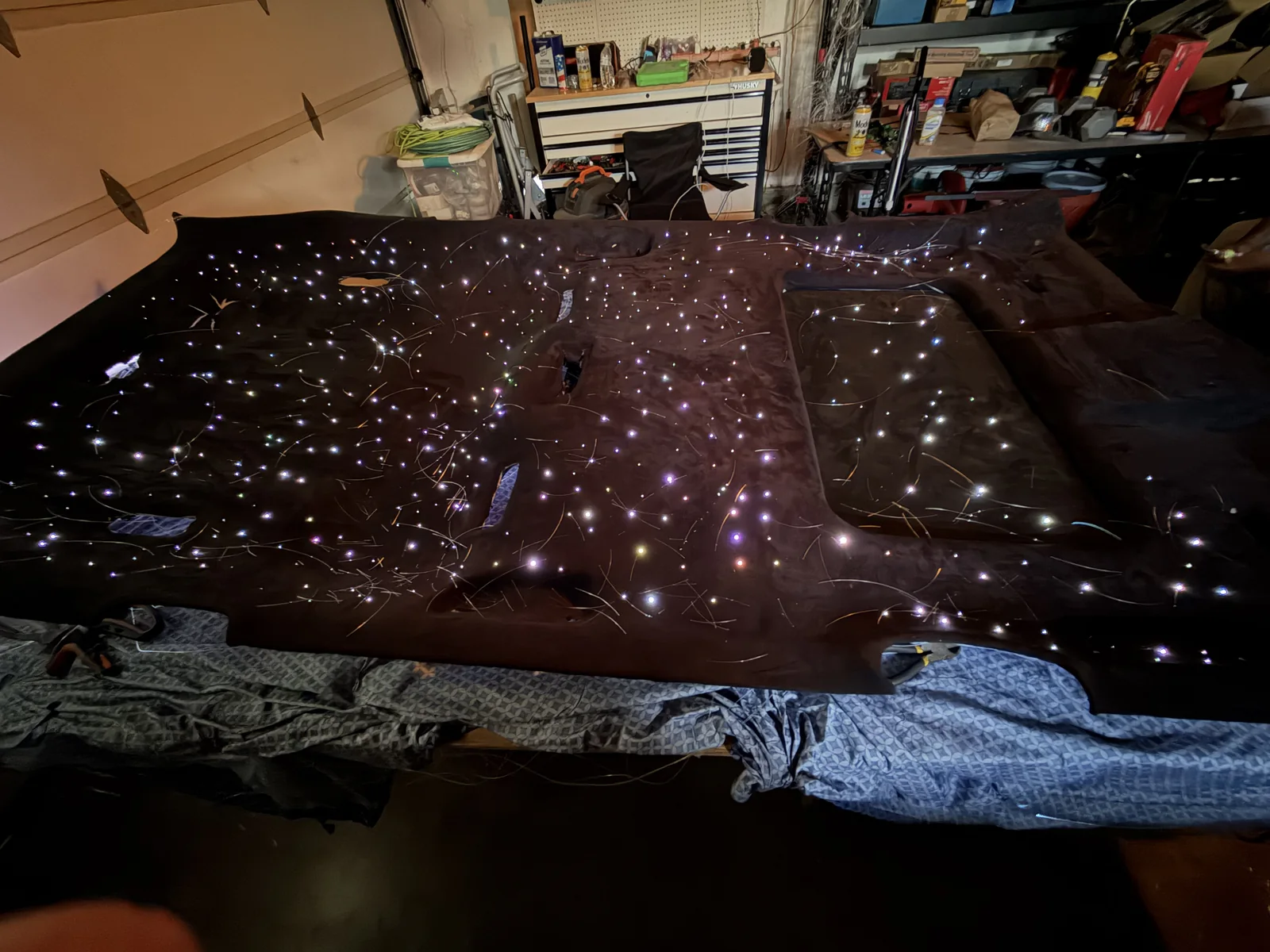
DIY videos can make the work appear quick because they often compress the process into a short edit. That is not a reliable estimate of the time a first-time installer will need. The research report includes enthusiast accounts of long project times, but individual reports do not guarantee how long your car will take. Budget for a careful project, not a video’s runtime.
Risks to consider before starting
Damage to interior parts
Trim pieces and headliner boards are designed for specific vehicles. Removing them without knowing where clips and fasteners sit can lead to broken parts, creasing, or visible damage. Replacement availability and cost vary by make, model, and year.
If your vehicle is newer, leased, high-value, or has an interior you want to preserve, think about the cost of repairing an accidental mistake as part of the DIY decision.
A finish you notice in daylight
The dramatic view is often photographed at night. In daylight, you may notice uneven spacing, visible fibers, marks in the fabric, or an arrangement that does not match your expectations. Sketching a layout beforehand and looking at well-lit reference photos can help you decide what kind of finish you want.
Ask to see real examples in both daytime and nighttime conditions. A heavily edited photo may not reveal the daytime finish.
Wiring and vehicle-specific safety
The lighting system needs power and must be routed in a way that suits the vehicle. Roof pillars and trim may be near vehicle systems that require special care. This article is not an installation manual. Do not guess about electrical connections or the location of safety equipment. Consult the vehicle’s service information and a qualified automotive professional.
No installer should promise zero risk without substantiation. Ask what the work involves, what procedures are followed, and how the interior is checked after reassembly.
DIY or professional: questions that help you decide
DIY may fit an older project vehicle with a simple interior if you already have the necessary skills, time, and a willingness to accept the risk of repair work. Professional installation may be worth exploring when you want a more predictable process, have a complex roof, or would rather not remove interior components yourself.
Before you decide, ask:
- Do I understand the kit and its compatibility requirements?
- Can I set aside enough uninterrupted time to work carefully?
- Am I prepared if a trim part or headliner needs repair?
- Have I seen examples of the finished work in daylight?
- Do I know what I will do if the kit or vehicle fit is not as expected?
- If I hire a professional, have I confirmed whether the shop supplies the kit or accepts customer-provided hardware?
How to discuss a professional quote
If you want JGlow Customs to review your vehicle, share the year, make, model, roof layout, and the general look you want. Mention a sunroof, panoramic roof, or unusual trim configuration. Include photos if the current quote process requests them.
JGlow is based in Fairfield, California. The owner says house calls may be available for an additional fee. Ask Jorge whether the service you want can be performed at your location, what preparation is required, and how any travel fee is determined.
Request a quote through https://www.jglowcustom.com/contact#quote. Ask Jorge directly about kit policy and the work included. Do not assume JGlow can complete or repair a DIY project unless that has been confirmed.
Make the decision with the whole project in view
A kit’s retail price is not the same as the cost of a finished installation. A DIY owner contributes time and accepts responsibility for fit and finish. A professional quote may include planning and installation labor, but its scope depends on the vehicle and the service.
Neither option is right for every driver. Make the choice that fits your vehicle, your skills, your schedule, and the result you expect. If you prefer to discuss professional installation, give JGlow enough information to review the project before you order parts.